Maintaining a mobile app in Australia costs between $3,000 and $15,000 per year for a small business application, depending on complexity. This budget covers mandatory platform updates (iOS and Android release new major versions annually), third-party API changes, security patches, and hosting fees. An app that receives no maintenance budget will fail to function within 12–24 months — not from neglect, but from the environment around it changing.
Why Apps Need Ongoing Maintenance (Even When Nothing Breaks)
This is the question most business owners ask after their app launches: “It’s working. Why do I need to keep paying for it?”
The answer is that the app exists inside an ecosystem that changes continuously:
- Apple releases a new iOS every September. Xcode’s build toolchain updates with it. APIs that were standard in iOS 16 may be deprecated in iOS 18. Your app does not break on day one — but it accumulates technical debt with each missed update.
- Google Play enforces target API levels. Apps that do not target the current or previous Android API level within a defined window are hidden from new downloads and eventually removed from the store. Google’s 2025 enforcement timeline gave apps a 12-month update window.
- Third-party services change their APIs. If your app connects to a payment gateway, a booking system, a mapping service, or a social login provider, each of those services updates its API independently. Breaking changes are announced but not applied for you.
- App Store review requirements tighten. Both Apple and Google update their review guidelines. Apps that previously complied may fail resubmission if they add features or if guidelines change for their category.
According to research by Clutch (2024), 68% of small business app owners underestimated ongoing maintenance costs when budgeting for app development.
What Maintenance Work Actually Covers
| Maintenance Task | Frequency | Estimated Cost (AUD) |
|---|---|---|
| iOS major version update (Xcode toolchain) | Annual (September) | $500–$2,000 |
| Android API level compliance update | Annual | $500–$1,500 |
| Third-party library/dependency updates | Quarterly | $300–$800/quarter |
| Security patch for known vulnerabilities | As needed (avg 2–4/year) | $200–$500 per patch |
| App Store resubmission (minor changes) | Per submission | $150–$400 |
| Backend/API hosting fees | Monthly | $50–$500/mo |
| Push notification service (e.g. OneSignal, FCM) | Monthly | $0–$200/mo |
| Crash monitoring (e.g. Sentry, Firebase Crashlytics) | Monthly | $0–$100/mo |
| Analytics (e.g. Firebase, Mixpanel) | Monthly | $0–$150/mo |
Annual total range for a typical Australian small business app: $3,000–$15,000
The lower end applies to simple apps (3–5 screens, no backend, basic functionality). The upper end applies to apps with payment processing, real-time features, custom backends, or apps that connect to multiple external APIs.
The Cost of Not Maintaining
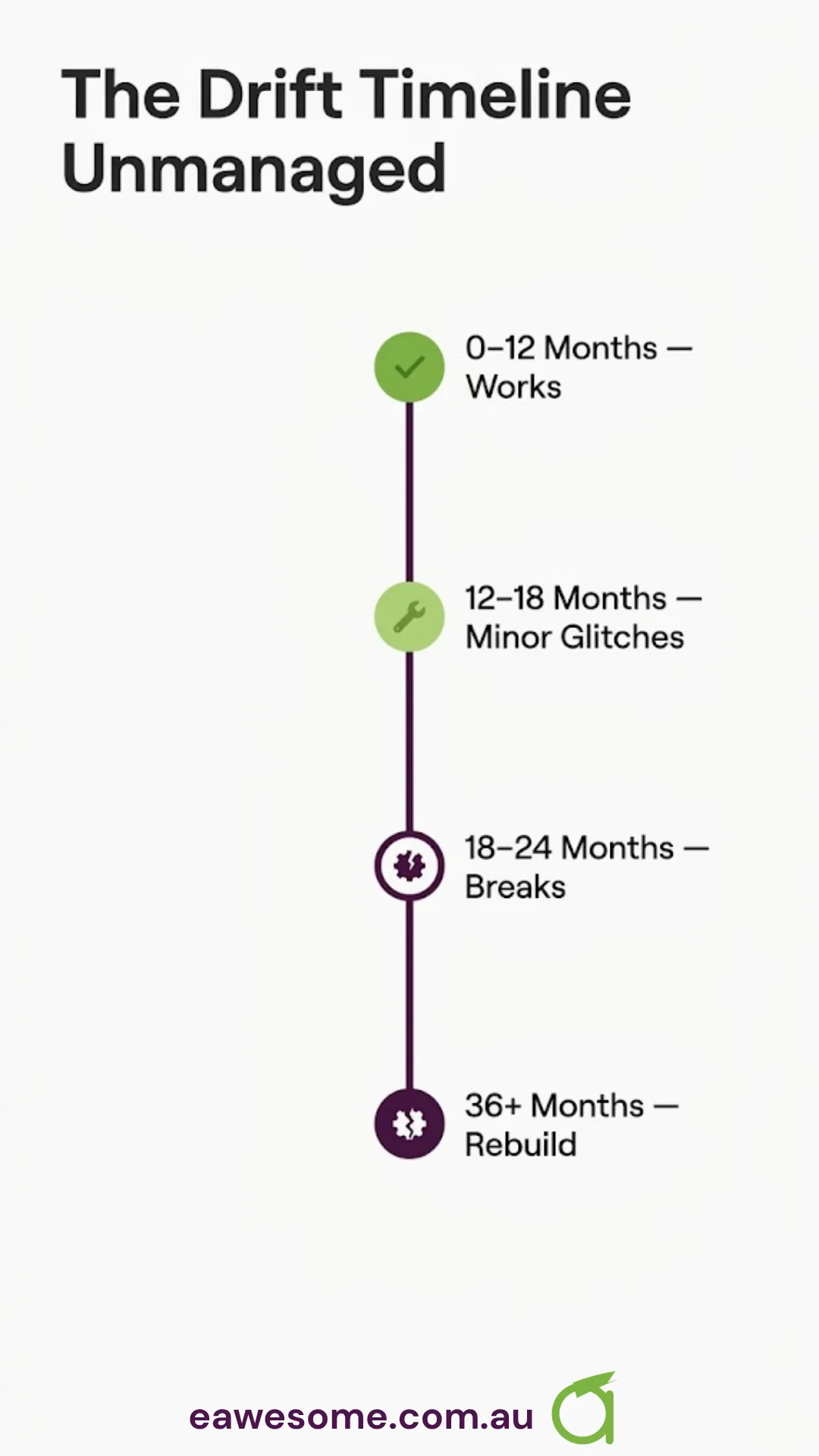
What happens if you skip maintenance? A realistic timeline:
| Time After Launch | What Happens |
|---|---|
| 0–12 months | App works as expected |
| 12–18 months | Minor UI glitches on newest devices; some library warnings |
| 18–24 months | Push notifications may stop working; login flows may break on updated OS |
| 24–36 months | App removed from new downloads on Play Store (API level too old); crashes on latest iOS for some users |
| 36+ months | App effectively non-functional; rebuild required rather than update |
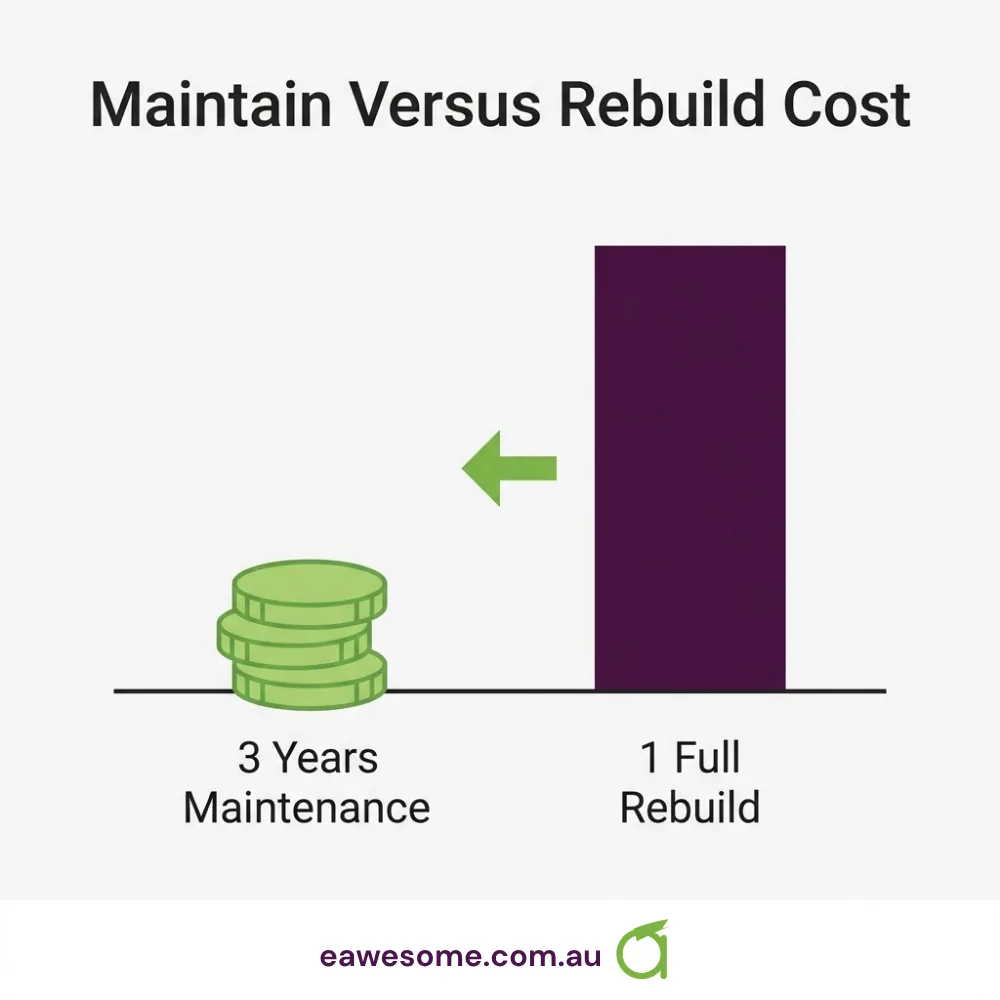
The cost of a rebuild after 3 years of deferred maintenance typically exceeds the cumulative cost of annual maintenance — by a factor of 3 to 5. A $3,000/year maintenance budget over 3 years ($9,000) is substantially cheaper than a $25,000–$50,000 rebuild.
Cross-Platform vs Native: Does It Affect Maintenance Cost?
Yes. This is one of the practical advantages of cross-platform frameworks.
| Framework | Maintenance Overhead | Notes |
|---|---|---|
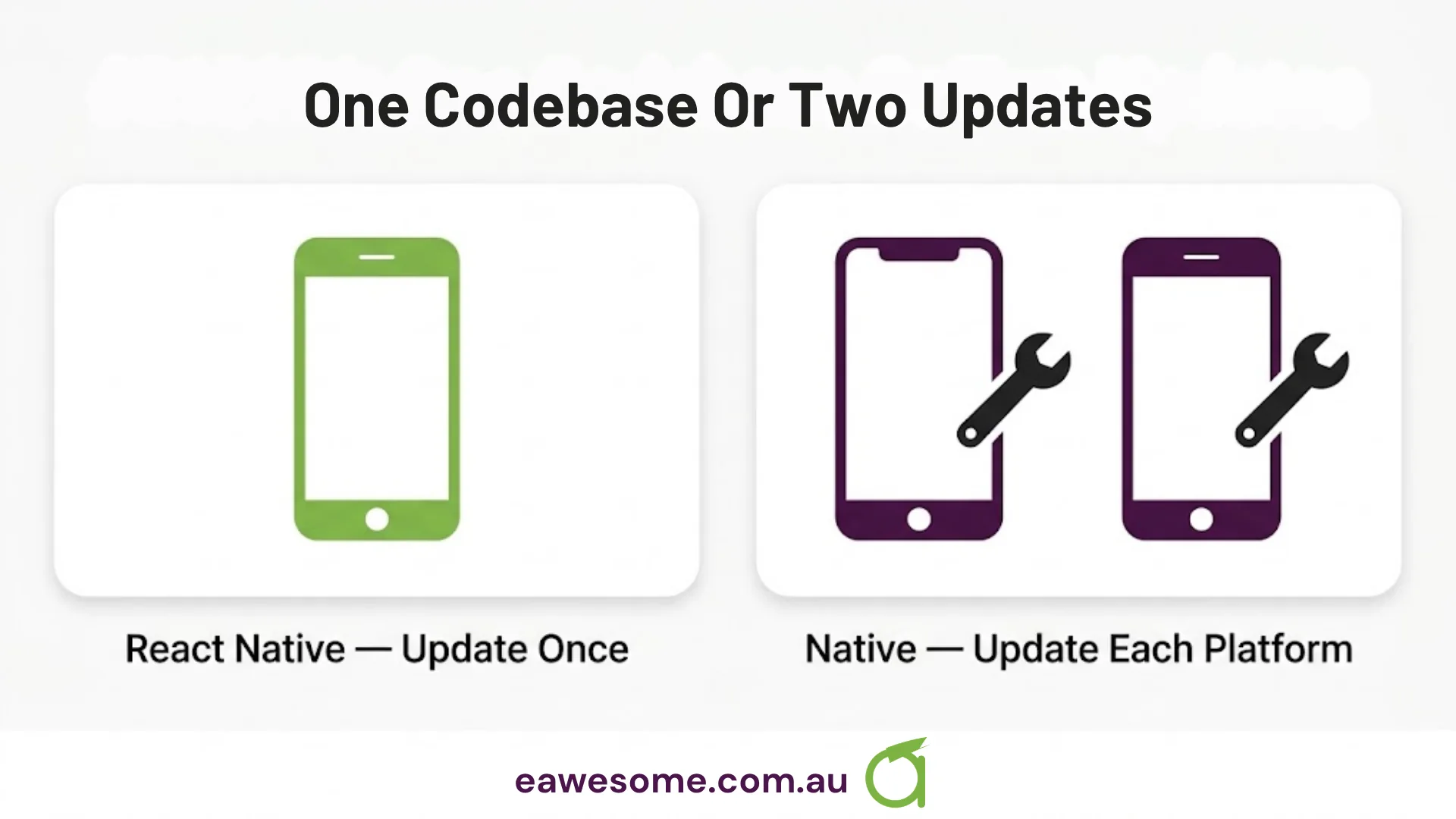
| React Native | Lower — one codebase, one update cycle | iOS and Android updates applied together |
| Flutter | Lower — similar to React Native | Google-backed; strong long-term support |
| Swift (native iOS only) | Higher — Apple-specific; annual Xcode/SDK updates | Best performance; higher long-term maintenance cost |
| Kotlin (native Android only) | Higher — Android-specific | Similar overhead to Swift |
| Native iOS + Native Android | Highest — two codebases, two update cycles | Doubles developer time for every platform update |
Most Australian small business apps built by Awesome Apps use React Native, specifically because one maintenance cycle covers both platforms — reducing annual costs by 30–50% compared to separate native apps.
How to Budget for App Maintenance
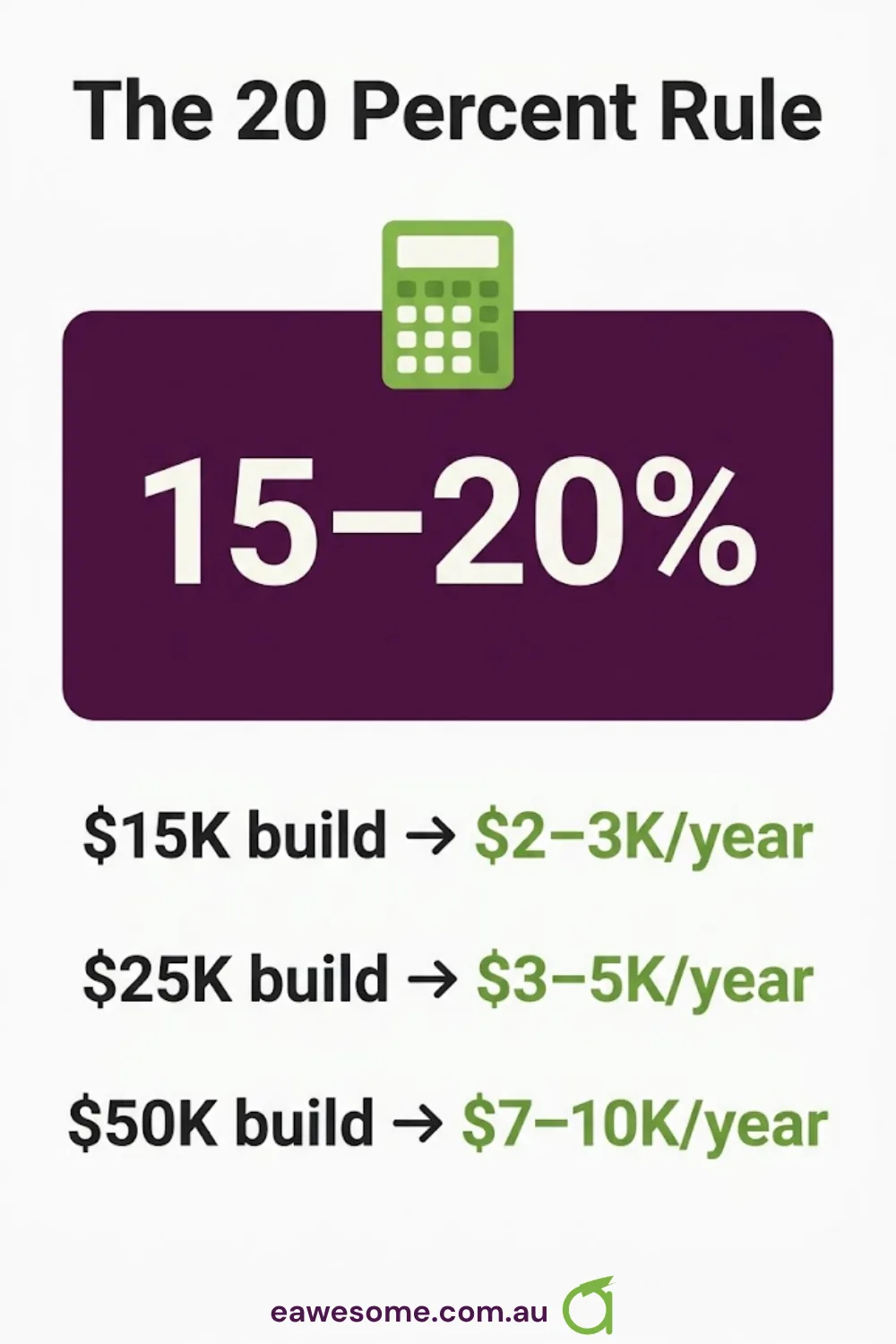
The standard industry rule of thumb: budget 15–20% of the original development cost per year for maintenance.
| Original Build Cost | Annual Maintenance Budget (15–20%) |
|---|---|
| $15,000 | $2,250–$3,000 |
| $25,000 | $3,750–$5,000 |
| $50,000 | $7,500–$10,000 |
| $100,000 | $15,000–$20,000 |
This budget should be agreed with your developer before the app launches — not negotiated after the first problem appears. At Awesome Apps, every app we build comes with a documented maintenance scope covering what’s included in the annual retainer and what triggers a separate quote.
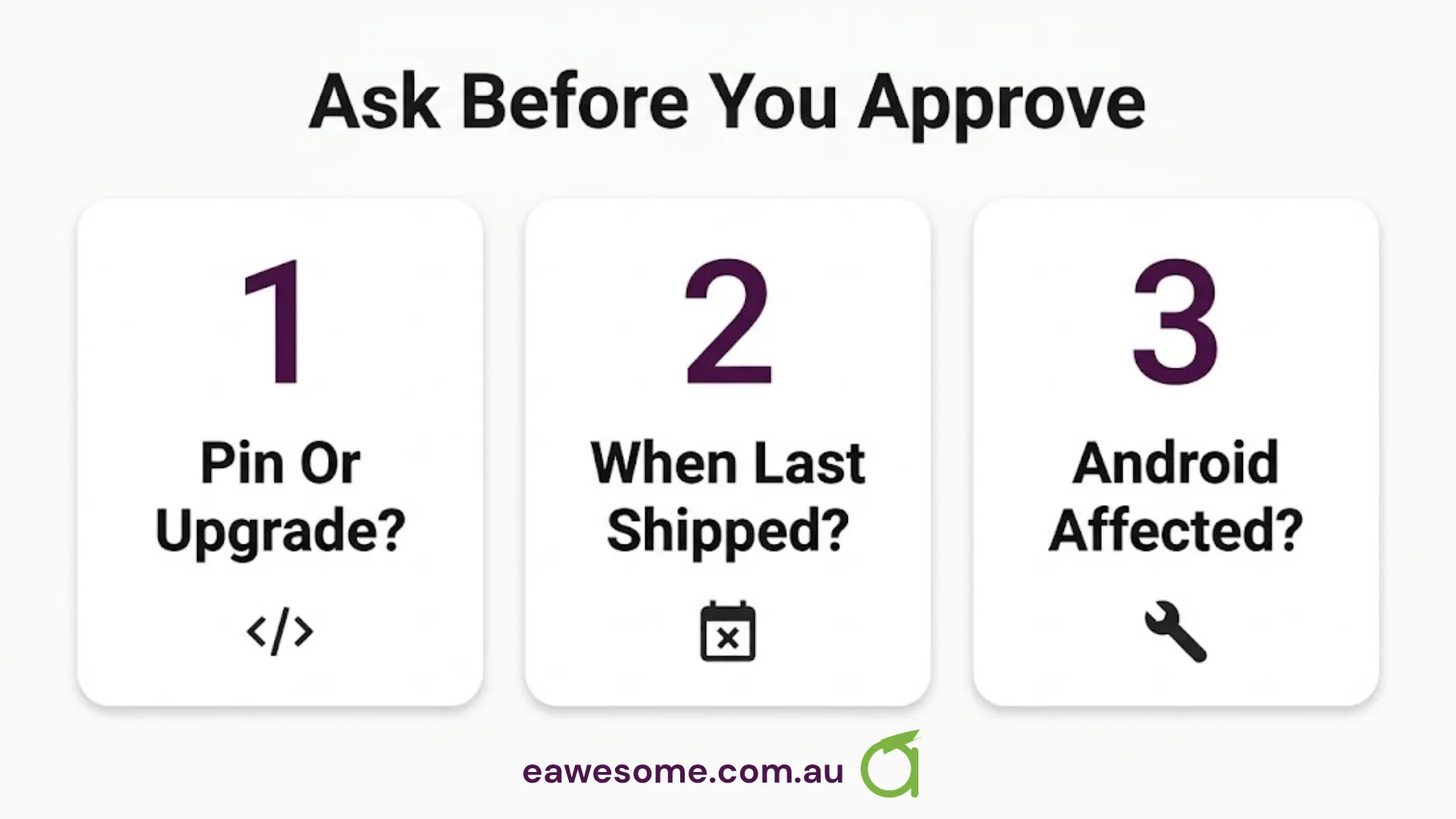
What to Ask Your App Developer Before Signing Off
- What happens when Apple releases a new iOS version — is this covered in the maintenance contract?
- Which third-party services does this app depend on, and how will API changes be handled?
- Who monitors for crashes and performance issues, and what is the response time?
- Is backend hosting included, or do I own and manage it separately?
- What is the process for App Store resubmission if there is a review rejection?
A developer who cannot answer these questions clearly has not thought through the operational phase of your app. The build phase is 20% of an app’s lifetime cost. The other 80% is maintenance and iteration.
Frequently Asked Questions
How much does it cost to maintain an app in Australia per year?
For a small business app in Australia, annual maintenance costs typically range from $3,000 to $15,000 per year. Simple apps (5 screens, no backend) sit at the lower end; apps with payment processing, custom backends, or multiple API integrations sit at the upper end. A common rule of thumb is to budget 15–20% of the original build cost annually.
Does my app need to be updated every year?
Yes, if you want it to remain available on the App Store and Google Play. Apple and Google both require apps to target current or near-current platform versions. Apps that fall too far behind are removed from new downloads and flagged to existing users. iOS releases a new major version every September; Android enforces API level compliance on an annual cycle.
What happens if I don’t update my app?
An unmaintained app will stop working within 18–36 months — not because of anything you did, but because the platform, operating system, and third-party services around it change. Eventually the app will be removed from the App Store and Google Play. Rebuilding from scratch after years of deferred maintenance typically costs 3–5 times what consistent annual maintenance would have cost.
Is React Native cheaper to maintain than native iOS and Android?
Yes. React Native uses a single codebase for both iOS and Android, so platform updates, security patches, and feature changes only need to be applied once. This reduces annual maintenance costs by approximately 30–50% compared to maintaining separate native iOS (Swift) and Android (Kotlin) apps.
Can I do app maintenance myself?
Only if you have a developer on your team. App maintenance requires code changes, App Store submissions, and managing build environments — it is not something that can be done through an app admin panel. Most Australian SMBs outsource maintenance to the agency that built the app or engage a managed support retainer.
What maintenance covers in practice is set out in how we work.
Talk to a Sydney app developer — free.
30 minutes. We'll tell you what your app needs, how long it takes, and what it costs. Real answers, no sales pitch.
Book Free App Strategy Call →Free · 30 minutes · No obligation