Building Healthcare Apps in Australia: Complete Guide to Compliance, Features & Best Practices 2024
The Australian healthcare technology sector is experiencing unprecedented growth, with digital health investments reaching record highs in 2024. As mobile technology becomes increasingly integrated into healthcare delivery, the opportunity for innovative healthcare applications has never been greater. However, developing healthcare apps in Australia requires navigating a complex field of regulatory compliance, privacy requirements, and user safety considerations.
At Awesome Apps, we’ve helped numerous healthcare organisations bring their digital health solutions to market while maintaining strict compliance standards. Whether you’re developing a patient management system, telemedicine platform, or wellness tracking app, understanding the regulatory framework and best practices is crucial for success.
This comprehensive guide will walk you through everything you need to know about building healthcare apps in Australia, from initial compliance considerations to deployment strategies that ensure both user safety and business success.
Understanding Australian Healthcare App Regulations
TGA Classification and Requirements
The Therapeutic Goods Administration (TGA) is Australia’s primary regulatory body for healthcare applications. Understanding TGA classification is the first critical step in your development process.
Class I Medical Device Software includes apps that:
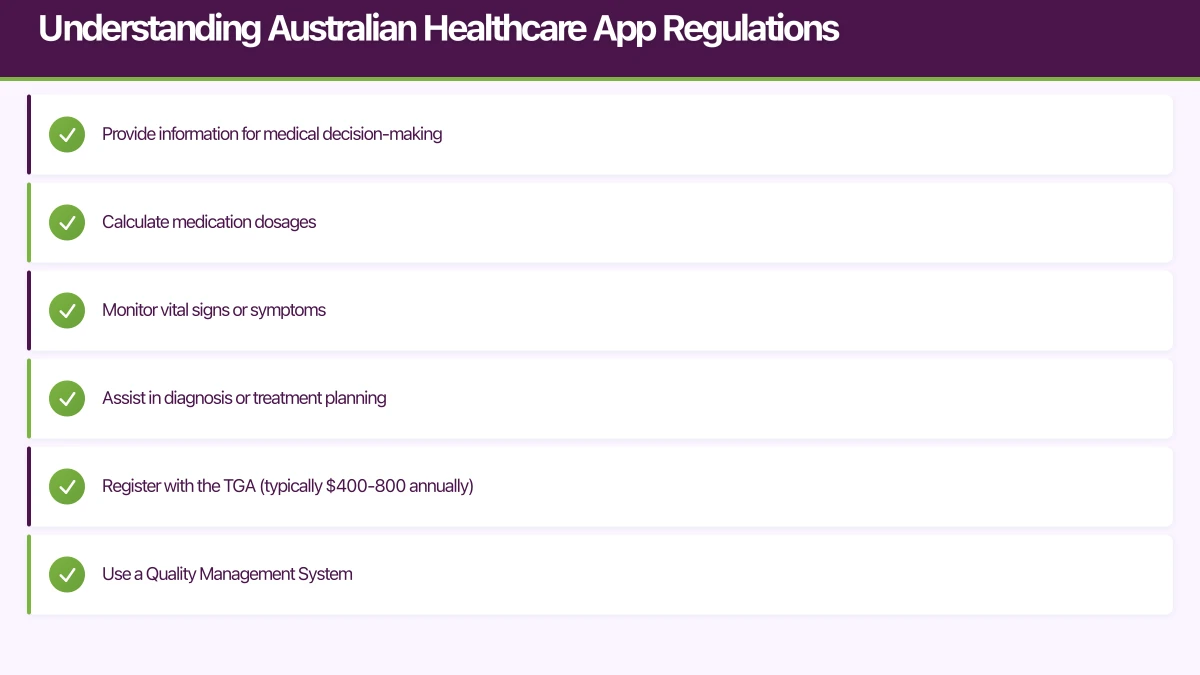
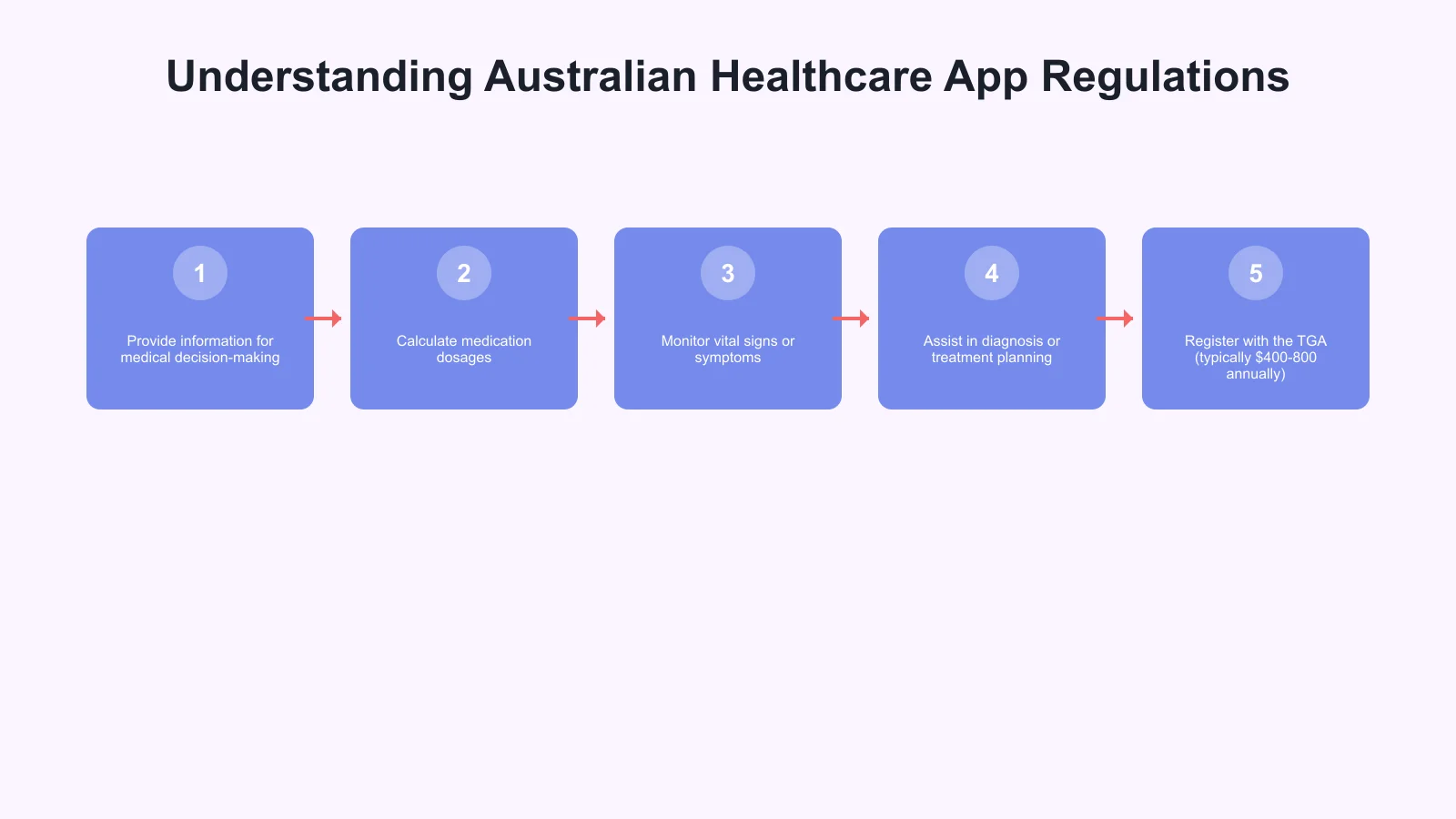
- Provide information for medical decision-making
- Calculate medication dosages
- Monitor vital signs or symptoms
- Assist in diagnosis or treatment planning
For Class I devices, you’ll need to:
- Register with the TGA (typically $400-800 annually)
- Use a Quality Management System
- Maintain detailed documentation of your development process
- Conduct regular safety assessments
Exempt Software categories include:
- General wellness and fitness apps
- Educational medical content
- Administrative healthcare tools
- Basic appointment booking systems
Privacy and Data Protection Compliance
Healthcare apps must comply with multiple privacy frameworks:
Privacy Act 1988 and Australian Privacy Principles (APPs)
- Use transparent data collection practices
- Provide clear privacy policies
- Enable user consent mechanisms
- Establish data breach notification procedures
Healthcare Identifiers Act 2010
- Properly handle Individual Healthcare Identifiers (IHI)
- Use secure authentication systems
- Maintain audit trails for identifier access
My Health Record Act 2012
- Follow integration guidelines if connecting to My Health Record
- Use appropriate security controls
- Maintain consumer consent rec
 ords
ords
Essential Features for Australian Healthcare Apps
Core Functionality Requirements
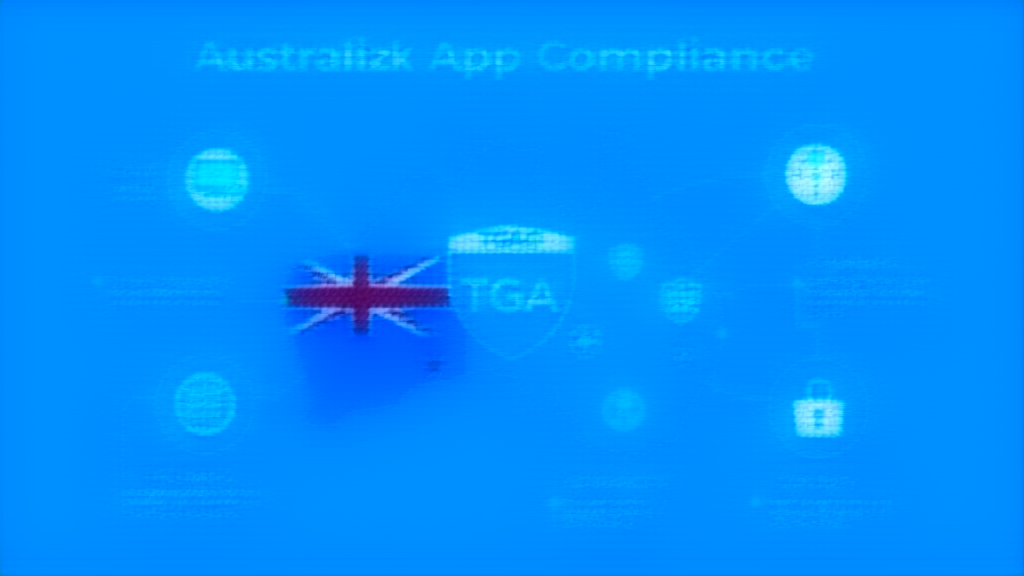
Secure User Authentication Use multi-factor authentication using:
- Biometric authentication (fingerprint, face ID)
- SMS or email verification
- Hardware security keys for clinical users
- Regular session timeout mechanisms
Data Encryption and Storage
- End-to-end encryption for all patient communications
- AES-256 encryption for data at rest
- Secure key management systems
- Regular security audits and penetration testing
Clinical Decision Support For medical device applications:
- Evidence-based clinical algorithms
- Drug interaction checking
- Allergy and contraindication alerts
- Integration with clinical guidelines
Integration Capabilities
Healthcare System Integration
- HL7 FHIR R4 compliance for interoperability
- Integration with major Electronic Medical Records (EMR) systems
- My Health Record API integration
- Secure messaging protocols for healthcare providers
Third-Party Service Integration
- Medicare claiming systems
- Pharmaceutical databases (AMH, MIMS)
- Laboratory result systems
- Imaging and diagnostic platforms
User Experience and Design Best Practices
Accessibility and Inclusive Design
Healthcare apps must be accessible to users with diverse needs and technical abilities.
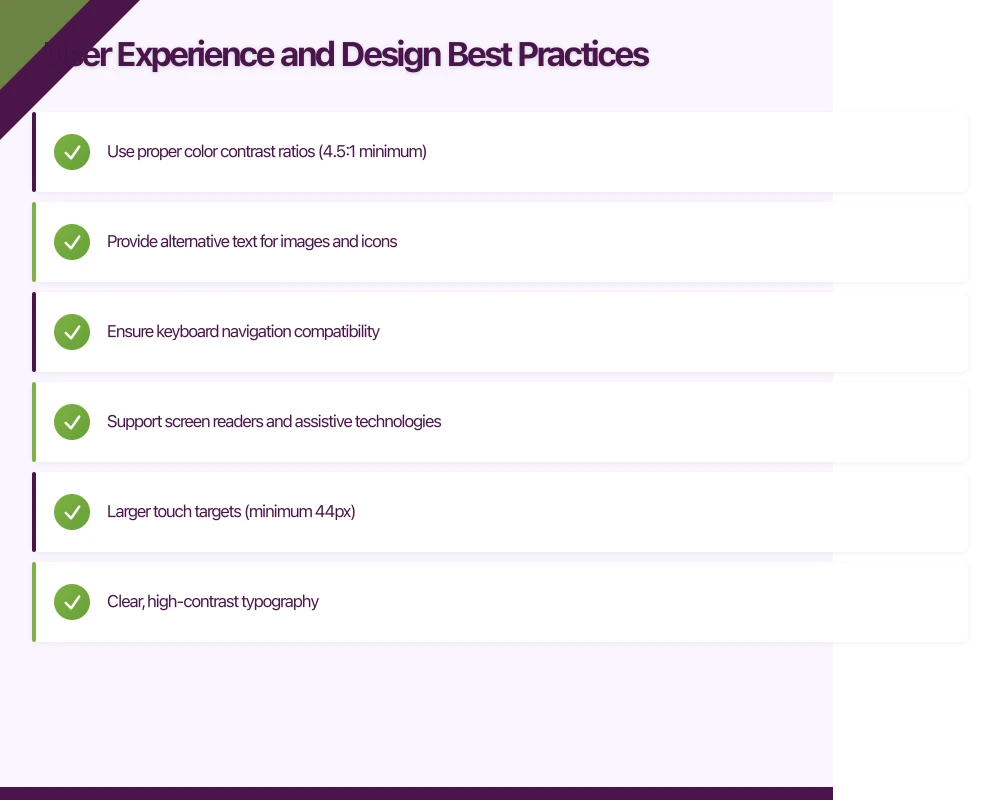
WCAG 2.1 AA Compliance
- Use proper color contrast ratios (4.5:1 minimum)
- Provide alternative text for images and icons
- Ensure keyboard navigation compatibility
- Support screen readers and assistive technologies
Age-Inclusive Design
- Larger touch targets (minimum 44px)
- Clear, high-contrast typography
- Simplified navigation patterns
- Voice input and output options
Cultural Sensitivity
- Multi-language support for Australia’s diverse population
- Culturally appropriate imagery and content
- Consideration for Indigenous health needs
- Flexible date and time formats
Clinical Workflow Integration
Streamlined User Journeys Design workflows that mirror existing clinical processes:
- Familiar terminology and conventions
- Minimal data entry requirements
- Quick access to frequently used features
- Seamless handoffs between care team members
Emergency and Critical Alert Systems
- Clear visual and audio alert hierarchies
- Escalation procedures for critical values
- Fail-safe mechanisms for system outages
- Offline functionality for essential features
Performance and Reliability
Technical Performance Standards
- App launch time under 3 seconds
- Response time under 1 second for common actions
- 99.9% uptime reliability
- Graceful degradation during network issues
Cross-Platform Consistency
- Consistent user experience across iOS and Android
- Native platform conventions and design patterns
- Optimized performance for various dev
 ice specifications
- Regular testing across multiple device types
Development and Testing Strategies

Quality Assurance Framework
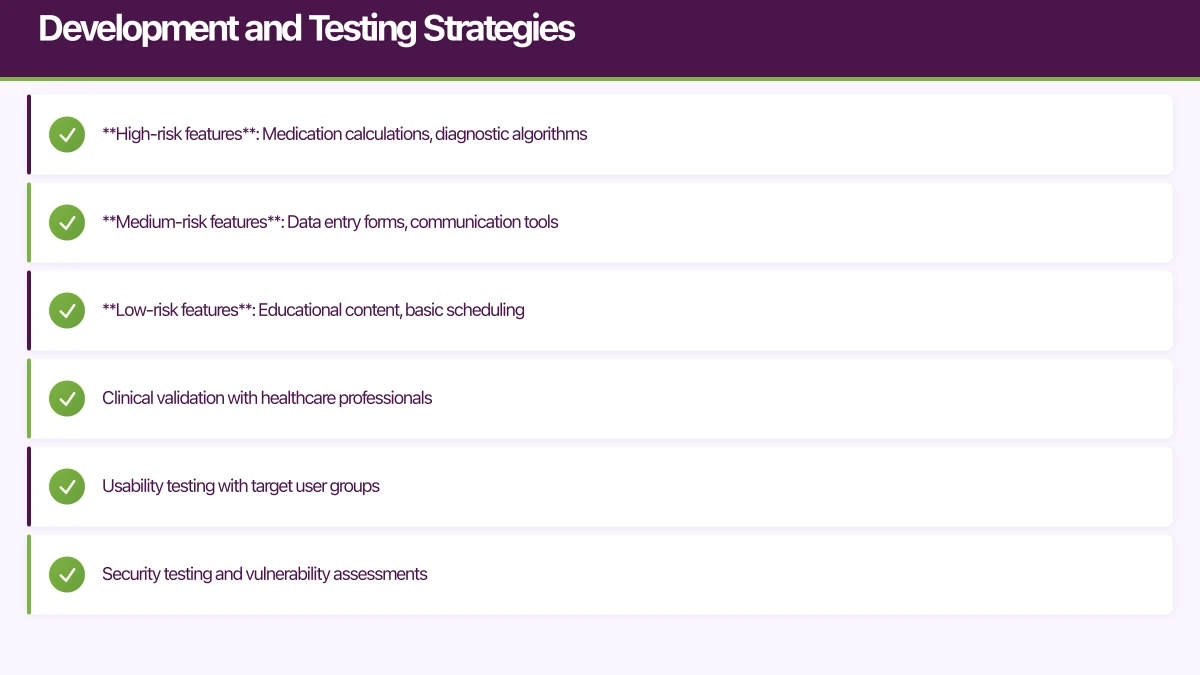
Risk-Based Testing Approach Use comprehensive testing strategies based on clinical risk:
- High-risk features: Medication calculations, diagnostic algorithms
- Medium-risk features: Data entry forms, communication tools
- Low-risk features: Educational content, basic scheduling
Validation and Verification
- Clinical validation with healthcare professionals
- Usability testing with target user groups
- Security testing and vulnerability assessments
- Performance testing under various load conditions
Deployment and Maintenance
App Store Approval Process
- Prepare detailed compliance documentation
- Include privacy policy and terms of service
- Provide clinical evidence for medical claims
- Plan for extended review times (4-8 weeks)
Ongoing Maintenance Requirements
- Regular security updates and patches
- Clinical content updates based on new guidelines
- Performance monitoring and optimization
- User feedback integration and feature updates
Change Management
- Version control for clinical algorithms
- Impact assessment for regulatory changes
- User training and communication strategies
- Rollback procedures for critical issues
Future-Proofing Your Healthcare App
Emerging Technologies
Artificial Intelligence Integration
- Machine learning for predictive analytics
- Natural language processing for clinical notes
- Computer vision for medical imaging
- Chatbots for patient engagement
Telehealth and Remote Monitoring
- Video consultation capabilities
- Remote patient monitoring integration
- IoT device connectivity
- Real-time vital sign tracking
Regulatory Evolution
Stay ahead of changing regulations:
- Monitor TGA software guidelines updates
- Participate in industry consultation processes
- Engage with healthcare standards organizations
- Plan for international expansion requirements
Key Takeaways for Healthcare App Success
Building a successful healthcare app in Australia requires balancing innovation with strict compliance requirements. Success depends on:
- Early Regulatory Planning: Engage with TGA requirements from the initial design phase
- User-Centered Design: Prioritize accessibility and clinical workflow integration
- Robust Security: Use comprehensive data protection and privacy measures
- Clinical Validation: Involve healthcare professionals throughout the development process
- Continuous Compliance: Establish ongoing monitoring and update processes
The Australian healthcare app market offers tremendous opportunities for developers who understand the unique regulatory field and user needs. By following these guidelines and best practices, you can create applications that not only meet compliance requirements but also deliver genuine value to healthcare providers and patients.
Ready to bring your healthcare app idea to life? Contact the Awesome Apps team to discuss your project requirements and learn how we can help navigate the complexities of healthcare app development in Australia.
An app is part of a bigger picture. Ash Ganda explores how businesses can build cohesive digital strategies that connect mobile, web, and cloud.
Awesome Apps operates under the Ganda Tech Services umbrella, delivering end-to-end technology solutions for Australian businesses.
Talk to a Sydney app developer — free.
30 minutes. We'll tell you what your app needs, how long it takes, and what it costs. Real answers, no sales pitch.
Book Free App Strategy Call →Free · 30 minutes · No obligation