Fitness App Development: 7 Essential Features That Drive User Retention in 2024
The fitness app market is more competitive than ever, with over 71,000 health and fitness apps available across iOS and Android platforms. While getting users to download your fitness app is challenging enough, the real battle lies in keeping them engaged long-term. Statistics show that fitness apps have a 80% user abandonment rate within the first six months, making user retention the ultimate measure of success.
At Awesome Apps, we’ve developed numerous fitness applications that have achieved remarkable user retention rates. Through extensive research, user testing, and real-world deployment, we’ve identified the key features that transform one-time downloaders into loyal, long-term users.
Whether you’re planning to develop a new fitness app or looking to improve an existing one, understanding these retention-driving features is crucial for creating an application that users genuinely want to return to day after day.
Personalization: The Foundation of User Engagement
Personalization is no longer a nice-to-have feature—it’s an absolute necessity for fitness app success. Users expect their fitness journey to be tailored specifically to their goals, fitness level, preferences, and lifestyle constraints.
Smart Onboarding and Goal Setting
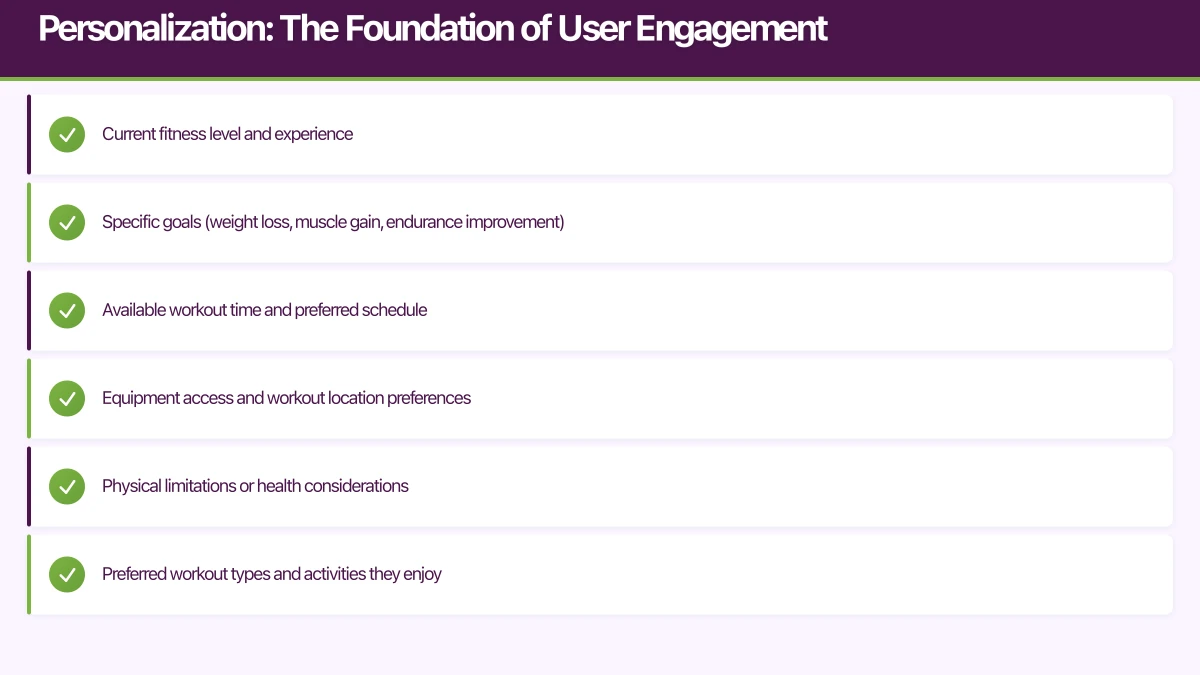
The personalization journey begins during onboarding. Successful fitness apps collect essential information including:
- Current fitness level and experience
- Specific goals (weight loss, muscle gain, endurance improvement)
- Available workout time and preferred schedule
- Equipment access and workout location preferences
- Physical limitations or health considerations
- Preferred workout types and activities they enjoy
Apps like MyFitnessPal and Fitbit excel at this initial data collection, using it to create highly customized user experiences from day one.
Adaptive Programming
The most engaging fitness apps don’t just set static programs—they adapt and evolve based on user performance and feedback. This includes:
- Progressive difficulty adjustment: Automatically increasing workout intensity as users improve
- Schedule flexibility: Adapting workout plans when users miss sessions or change their availability
- Performance-based modifications: Adjusting future workouts based on completed exercise data and user-reported difficulty levels
- Preference learning: Gradually understanding which types of workouts users prefer and incorporating more of these activities
Dynamic Content Recommendations
Personalization extends beyond workouts to include:
- Nutritional advice tailored to fitness goals and dietary preferences
- Recovery recommendations based on workout intensity and frequency
- Educational content relevant to the user’s current fitness phase
- Equipment suggestions based on workout preferences and budget indicators
Gamification: Maki
 ng Fitness Fun and Addictive

Gamefication transforms the often-challenging process of fitness improvement into an engaging, reward-driven experience. When implemented correctly, gamification can increase user engagement by up to 90% and significantly improve long-term retention.
Achievement Systems and Badges
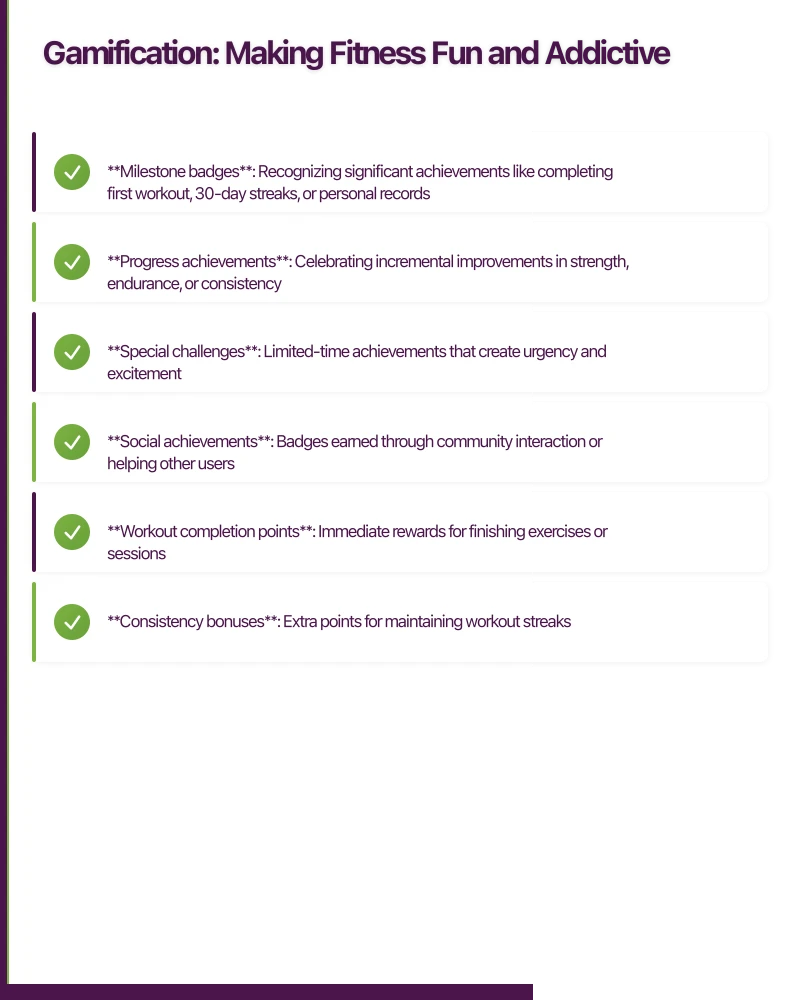
A well-designed achievement system provides users with constant motivation through:
- Milestone badges: Recognizing significant achievements like completing first workout, 30-day streaks, or personal records
- Progress achievements: Celebrating incremental improvements in strength, endurance, or consistency
- Special challenges: Limited-time achievements that create urgency and excitement
- Social achievements: Badges earned through community interaction or helping other users
Strava’s achievement system is particularly effective, offering everything from distance milestones to segment competitions that keep users constantly working toward their next badge.
Point Systems and Levels
Implementing a comprehensive point system gives users tangible progress markers:
- Workout completion points: Immediate rewards for finishing exercises or sessions
- Consistency bonuses: Extra points for maintaining workout streaks
- Quality multipliers: Higher points for completing challenging workouts or achieving personal bests
- Level progression: Clear advancement through fitness levels with associated perks and unlocked content
Challenges and Competitions
Competitive elements tap into users’ natural desire to compete and achieve:
- Personal challenges: Individual goals like “complete 20 workouts this month”
- Community challenges: Group challenges that foster social connection
- Leaderboards: Rankings based on various metrics like consistency, improvement, or total activity
- Seasonal events: Special competitions tied to holidays, seasons, or fitness-related awareness months
Social Features: Building Community and Accountability
Humans are inherently social creatures, and fitness journeys are significantly more successful when shared with others. Social features create accountability, motivation, and emotional investment that keeps users returning to your app.
Workout Sharing and Social Feeds
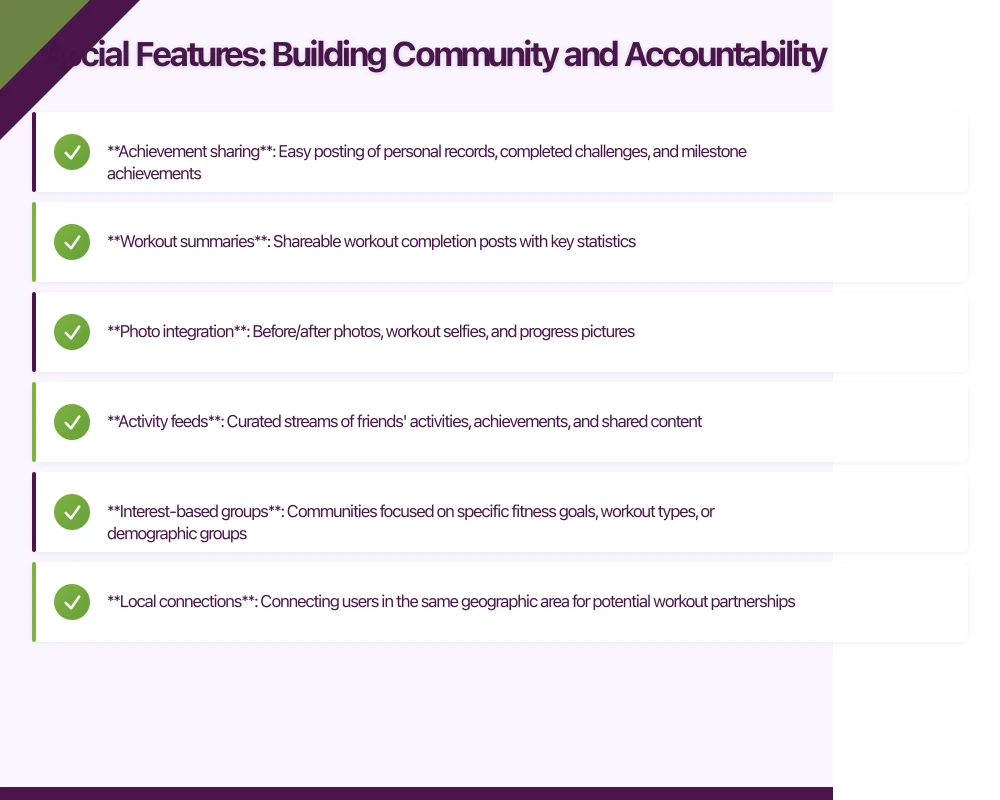
Social sharing capabilities should include:
- Achievement sharing: Easy posting of personal records, completed challenges, and milestone achievements
- Workout summaries: Shareable workout completion posts with key statistics
- Photo integration: Before/after photos, workout selfies, and progress pictures
- Activity feeds: Curated streams of friends’ activities, achievements, and shared content
Community Building Features
Strong communities keep users engaged long-term through:
- Interest-based groups: Communities focused on specific fitness goals, workout types, or demographic groups
- Local connections: Connecting users in the same geographic area for potential workout partnerships
- Mentorship programs: Pairing experienced users with beginners
- Expert access: Q&A sessions or advice from certified trainers and nutritionists
Accountability Partners and Team Features
Accountability dramatically improves fitness adherence:
- Workout buddies: Pairing users with similar goals and schedules
- Team challenges: Small group competitions that create mutual accountability
- Check-in systems: Regular accountability check-ins with partners or groups
- Progress sharing: Private or semi-private sharing of detailed progress with accountability p
 artners
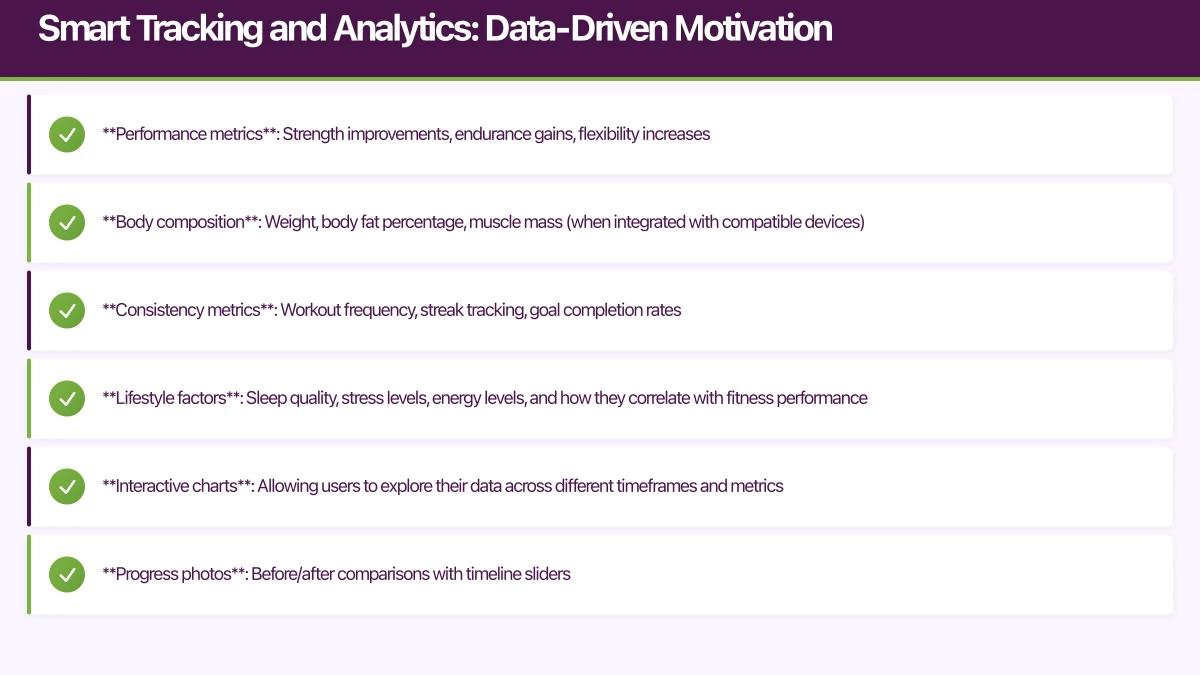
Smart Tracking and Analytics: Data-Driven Motivation
Users who can clearly see their progress are significantly more likely to continue their fitness journey. Smart tracking goes beyond basic metrics to provide meaningful insights that drive continued engagement.
Comprehensive Progress Tracking
Effective tracking systems monitor multiple dimensions of fitness progress:
- Performance metrics: Strength improvements, endurance gains, flexibility increases
- Body composition: Weight, body fat percentage, muscle mass (when integrated with compatible devices)
- Consistency metrics: Workout frequency, streak tracking, goal completion rates
- Lifestyle factors: Sleep quality, stress levels, energy levels, and how they correlate with fitness performance
Visual Progress Representation
Data becomes motivating when presented in visually appealing, easy-to-understand formats:
- Interactive charts: Allowing users to explore their data across different timeframes and metrics
- Progress photos: Before/after comparisons with timeline sliders
- Achievement timelines: Visual representations of milestones and improvements over time
- Correlation insights: Showing relationships between different aspects of health and fitness
Predictive Analytics and Insights
Advanced apps use data to provide valuable insights:
- Performance predictions: Estimating when users might achieve specific goals based on current progress
- Optimization suggestions: Recommendations for improving workout timing, intensity, or frequency
- Risk assessments: Identifying potential overtraining or highlighting when users might be at risk of abandoning their routine
- Personalized coaching: AI-driven advice based on individual progress patterns and goals
Seamless User Experience: Removing Friction at Every Step
Even the most feature-rich fitness app will fail if the user experience is clunky, slow, or confusing. A seamless UX ensures that users can focus on their fitness goals rather than struggling with the app interface.
Intuitive Navigation and Design
User-friendly design principles for fitness apps include:
- One-tap workout start: Users should be able to begin their planned workout with minimal navigation
- Clear visual hierarchy: Important features and information should be immediately apparent
- Consistent design language: Uniform styling, iconography, and interaction patterns throughout the app
- Accessibility compliance: Ensuring the app works well for users with various disabilities and limitations
Offline Functionality
Fitness apps must work reliably regardless of internet connectivity:
- Offline workout access: Downloaded workouts, videos, and instructions available without internet
- Local data storage: Workout data saved locally and synced when connectivity returns
- Cached content: Frequently accessed information stored on-device for instant access
- Progressive loading: Smart content loading that prioritizes essential features
Device Integration and Wearables
Seamless integration with fitness devices enhances the user experience:
- Wearable synchronization: Automatic data sync with popular fitness trackers and smartwatches
- Heart rate monitoring: Real-time heart rate data integration for workout optimization
- Music integration: Easy access to playlists and music controls during workouts
- Health app connectivity: Integration with Apple Health, Google Fit, and other health platforms
Performance Optimization
Technical performance directly impacts user retention:
- Fast loading times: App should launch and navigate quickly, even on older devices
- Smooth animations: Fluid transitions and interactions that feel responsive
- Battery optimization: Efficient power usage during longer workout sessions
- Reliable synchronization: Consistent, error-free data syncing across devices
Conclusion: Building Fitness Apps That Last
Creating a fitness app that retains users long-term requires a comprehensive approach that addresses multiple aspects of the user experience. The most successful fitness apps combine personalization, gamification, social features, smart tracking, and seamless UX into a cohesive experience that genuinely adds value to users’ fitness journeys.
Key Takeaways for Fitness App Development:
- Start with personalization: Every feature should adapt to individual user needs, preferences, and progress levels
- Make it engaging: Gamification elements should feel natural and motivating, not forced or gimmicky
- Foster community: Social features create emotional investment and accountability that dramatically improve retention
- Provide meaningful insights: Users need to clearly see their progress and understand how to improve
- Eliminate friction: Every interaction should be smooth, intuitive, and focused on helping users achieve their fitness goals
- Plan for the long term: Consider how features will keep users engaged months and years after initial download
- Test and iterate: Continuously gather user feedback and data to refine and improve the experience
At Awesome Apps, we understand that developing a successful fitness app requires deep expertise in both mobile development and user psychology. Our team specializes in creating engaging, retention-focused fitness applications that turn downloads into dedicated users.
If you’re ready to develop a fitness app that stands out in the crowded marketplace and keeps users coming back for more, contact our team today. We’ll help you transform your fitness app concept into a powerful tool that genuinely improves users’ lives while building a sustainable, successful business.
Drive more app downloads with a professional web presence. Cosmos Web Tech specialises in web design and SEO for Australian tech businesses.
Awesome Apps is the mobile development division of Ganda Tech Services, building iOS and Android apps for Australian businesses.
Talk to a Sydney app developer — free.
30 minutes. We'll tell you what your app needs, how long it takes, and what it costs. Real answers, no sales pitch.
Book Free App Strategy Call →Free · 30 minutes · No obligation