Native vs Cross-Platform App Development in 2025: The Complete Decision Guide
The mobile app development field has evolved dramatically over the past few years, and as we navigate through 2025, the choice between native and cross-platform development has become more nuanced than ever. With new frameworks emerging, existing platforms maturing, and user expectations reaching new heights, making the right decision for your app project requires careful consideration of multiple factors.
Whether you’re a startup founder with a groundbreaking idea, an enterprise looking to modernize your mobile presence, or a development team evaluating your next project approach, this comprehensive guide will help you navigate the native vs cross-platform decision with confidence.
Understanding the Current Field in 2025
The mobile development ecosystem in 2025 is characterized by several key trends that directly impact the native vs cross-platform debate:
Enhanced Cross-Platform Maturity: Frameworks like Flutter and React Native have reached unprecedented levels of sophistication, offering near-native performance and access to platform-specific features that were previously exclusive to native development.
AI and Machine Learning Integration: Modern apps increasingly rely on AI capabilities, with both native and cross-platform solutions offering robust ML integration options through TensorFlow Lite, Core ML, and cloud-based services.
Advanced Hardware Utilization: With devices featuring more powerful processors, enhanced cameras, and sophisticated sensors, the performance gap between native and cross-platform apps has narrowed significantly.
Developer Experience Evolution: Modern development tools, hot reload capabilities, and improved debugging have made cross-platform development more efficient, while native development has benefited from enhanced IDEs and streamlined workflows.
Native Development: When Platform-Specific E
 xcellence Matters
Native development involves creating separate applications for each platform using platform-specific programming languages and tools - Swift or Objective-C for iOS, and Kotlin or Java for Android.
Advantages of Native Development
Uncompromised Performance: Native apps have direct access to device hardware and operating system APIs, resulting in optimal performance, especially for resource-intensive applications like games, AR/VR experiences, or complex data processing apps.
Platform-Specific User Experience: Native development allows you to fully embrace each platform’s design guidelines and user interaction patterns. iOS apps can use the latest Human Interface Guidelines, while Android apps can use Material Design 3 principles seamlessly.
Immediate Access to New Features: When Apple or Google releases new OS features, native developers can use them immediately without waiting for cross-platform framework updates.
Advanced Hardware Integration: For apps requiring sophisticated camera controls, precise sensor data, or complex multimedia processing, native development provides unrestricted access to device capabilities.
When to Choose Native Development
Consider native development when:
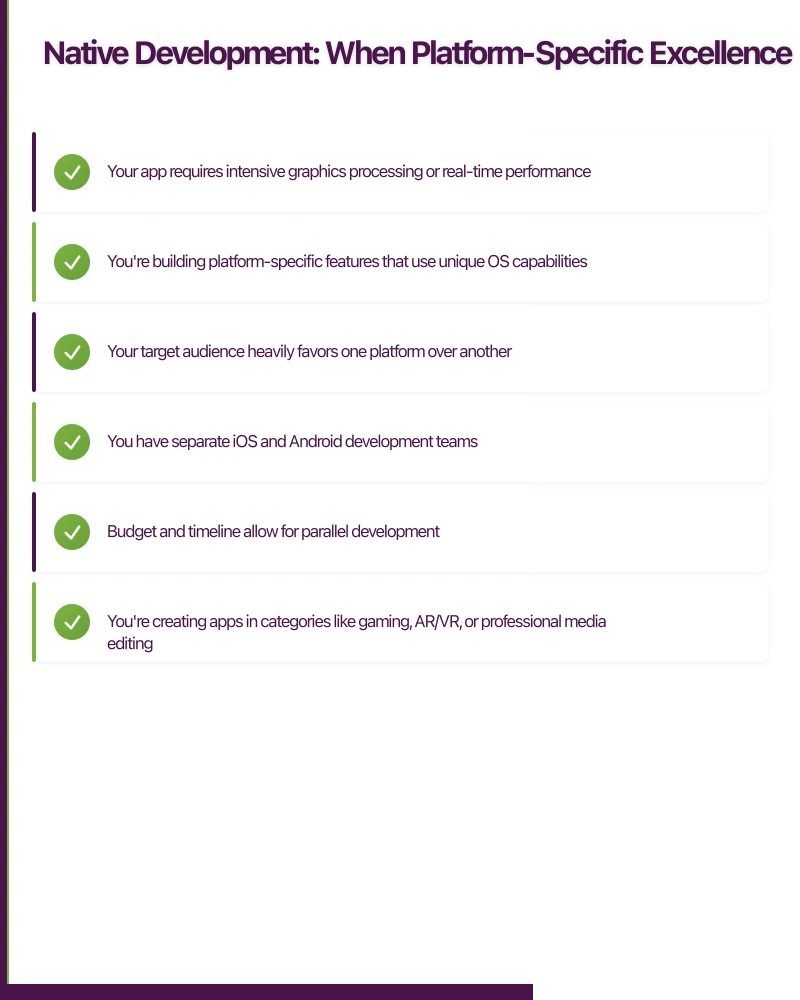
- Your app requires intensive graphics processing or real-time performance
- You’re building platform-specific features that use unique OS capabilities
- Your target audience heavily favors one platform over another
- You have separate iOS and Android development teams
- Budget and timeline allow for parallel development
- You’re creating apps in categories like gaming, AR/VR, or professional media editing
Real-World Example
Consider a professional photo editing app like Adobe Photoshop Camera. The app requires direct access to advanced camera APIs, real-time image processing, and integration with platform-specific photo libraries. The complexity and performance requirements make native development the logical choice, ensuring optimal user
 experience on both iOS and Android.
Cross-Platform Development: Efficiency Meets Capability
Cross-platform development allows you to write code once and deploy it across multiple platforms, with Flutter, React Native, and Xamarin leading the charge in 2025.
Advantages of Cross-Platform Development
Accelerated Development Timeline: Single codebase development can reduce development time by 30-50%, allowing faster time-to-market and simultaneous platform launches.
Cost Efficiency: Maintaining one development team and codebase significantly reduces development and maintenance costs, making it attractive for startups and budget-conscious projects.
Consistent User Experience: Cross-platform frameworks ensure uniform functionality and behavior across platforms, reducing the complexity of maintaining feature parity.
Shared Business Logic: Core application logic, API integrations, and data management can be written once and shared across platforms, reducing code duplication and potential bugs.
Leading Cross-Platform Frameworks in 2025
Flutter: Google’s UI toolkit continues to gain traction with its widget-based architecture, excellent performance, and growing ecosystem. Flutter’s Dart language and comprehensive widget library make it ideal for apps with custom UI requirements.
React Native: Meta’s framework remains popular among teams with JavaScript expertise, offering excellent third-party library support and strong community backing. The New Architecture (Fabric and TurboModules) has addressed many previous performance concerns.
Xamarin/.NET MAUI: Microsoft’s evolution of Xamarin provides excellent integration with Microsoft services and appeals to teams with C# expertise.
When to Choose Cross-Platform Development
Cross-platform development is ideal when:
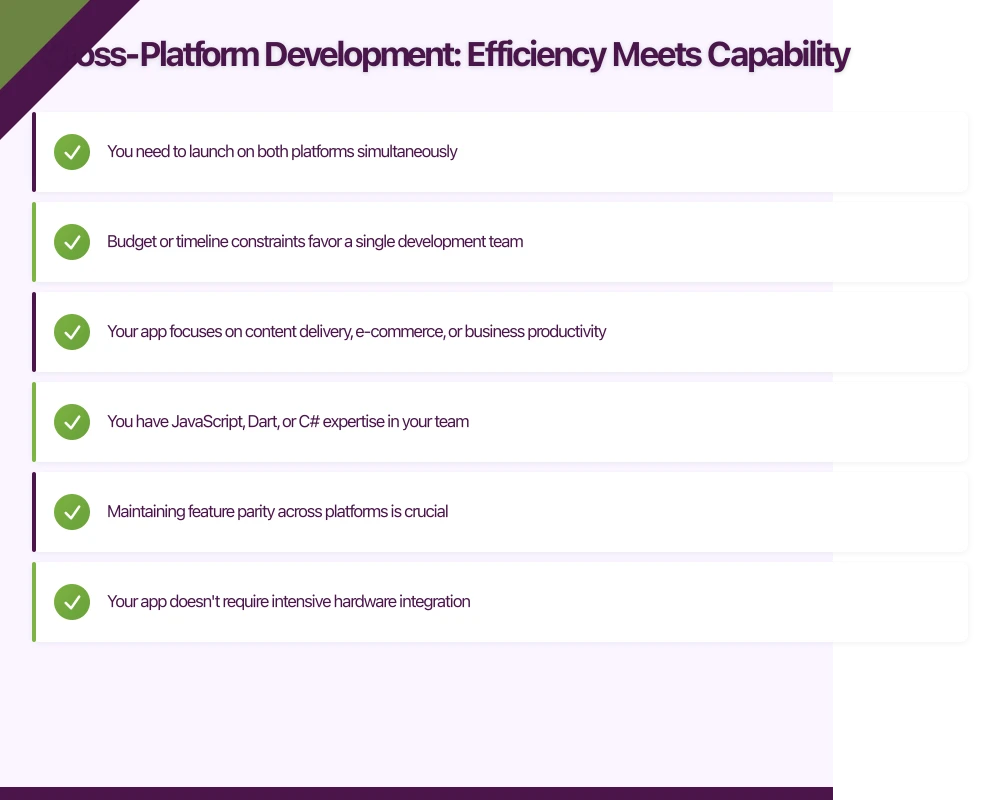
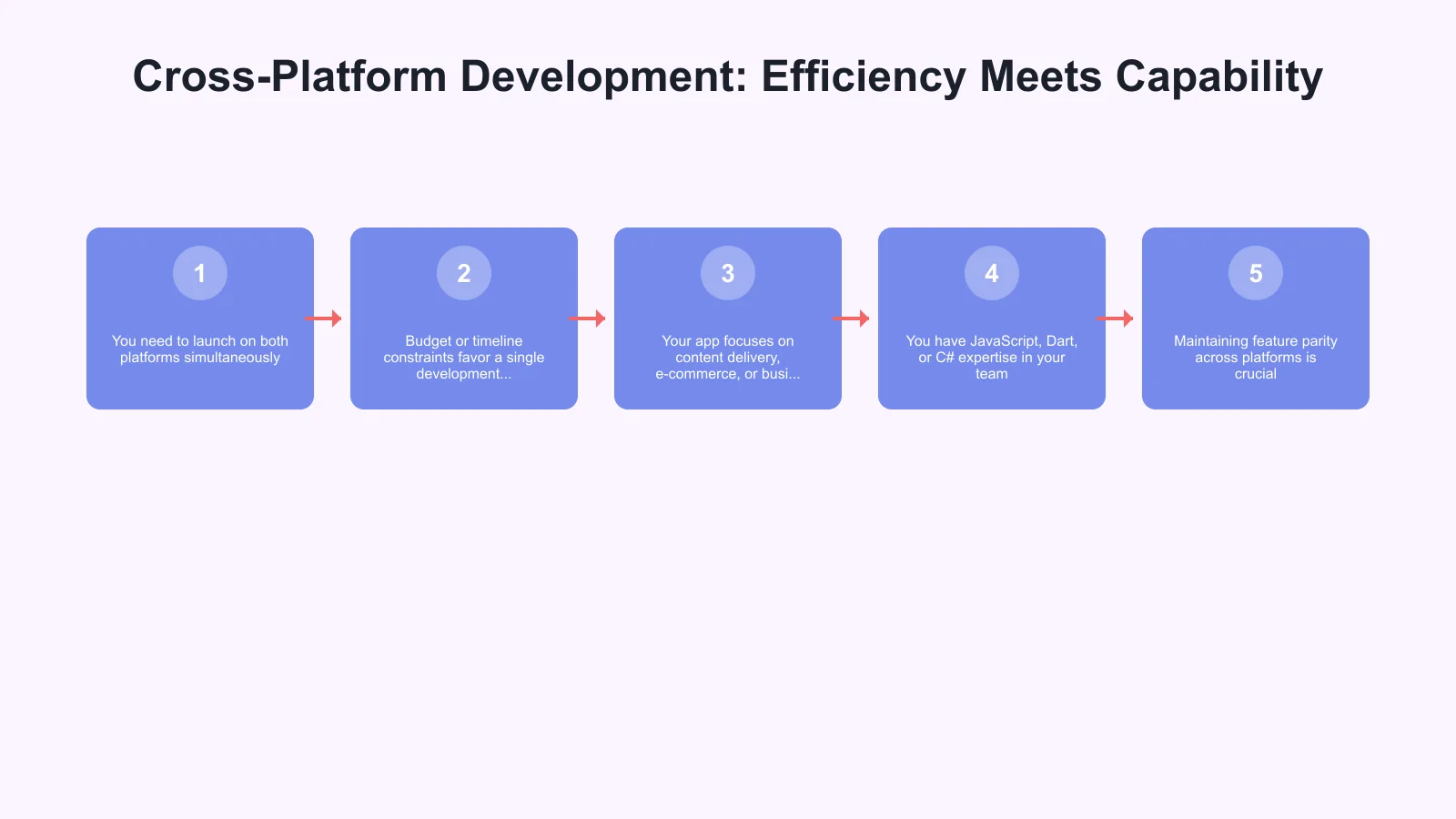
- You need to launch on both platforms simultaneously
- Budget or timeline constraints favor a single development team
- Your app focuses on content delivery, e-commerce, or business productivity
- You have JavaScript, Dart, or C# expertise in your team
- Maintaining feature parity across platforms is crucial
- Your app doesn’t require intensive hardware integration
Real-World Example
Consider a fintech app like a banking or investment platform. These apps primarily focus on data presentation, form interactions, and secure transactions. A cross-platform approach using React Native or Flutter can deliver excellent user experience while ensuring consistent security implementations and business logic across platforms, all while re
 ducing development costs and time-to-market.
Key Decision Factors for Your 2025 App Project
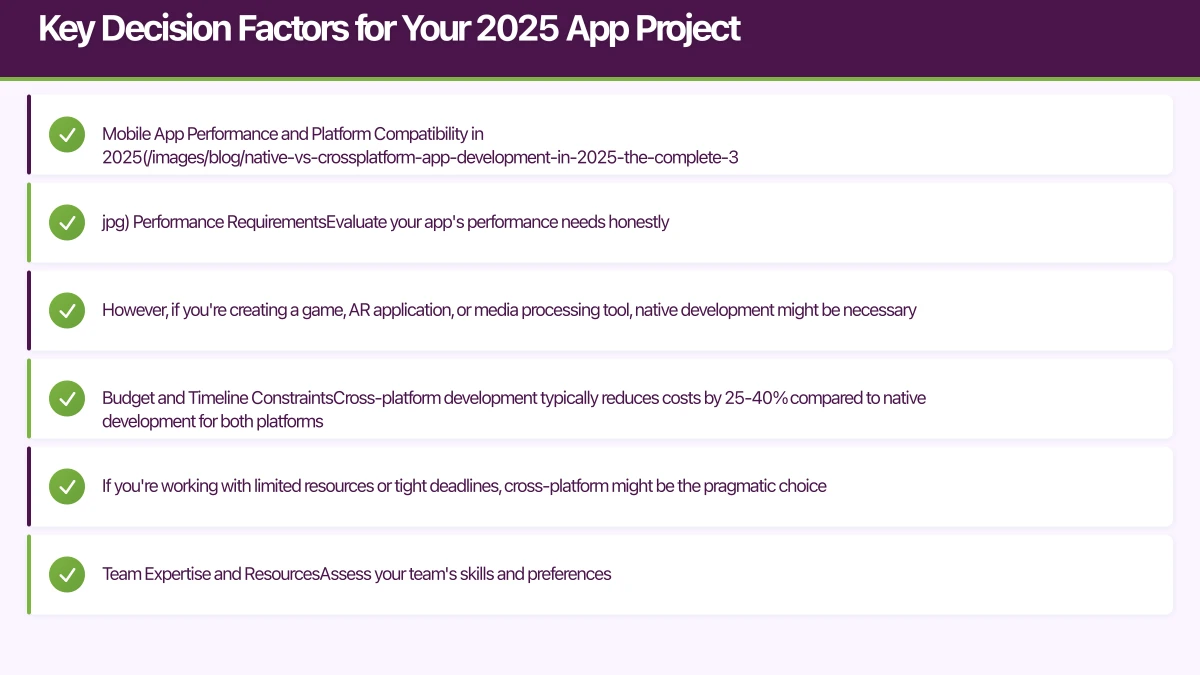
Performance Requirements
Evaluate your app’s performance needs honestly. If you’re building a social media app, e-commerce platform, or business productivity tool, cross-platform frameworks can deliver excellent performance. However, if you’re creating a game, AR application, or media processing tool, native development might be necessary.
Budget and Timeline Constraints
Cross-platform development typically reduces costs by 25-40% compared to native development for both platforms. If you’re working with limited resources or tight deadlines, cross-platform might be the pragmatic choice.
Team Expertise and Resources
Assess your team’s skills and preferences. If you have experienced iOS and Android developers, native development might use existing expertise. If your team has strong web development skills, React Native could be a natural fit.
Target Audience and Market Strategy
Analyze your target market’s platform preferences. If 80% of your audience uses iOS, starting with native iOS development might make sense. For global markets with diverse platform usage, cross-platform ensures broader reach.
Long-term Maintenance and Scalability
Consider the long-term implications. Native apps might require separate teams for updates and maintenance, while cross-platform apps can be maintained by a single team but might face framework evolution challenges.
Integration Requirements
Evaluate your need for third-party integrations, existing system compatibility, and platform-specific features. Some integrations might be easier to use natively, while others work seamlessly across platforms.
Making Your Decision: A Practical Framework
To make the right choice for your 2025 app project, follow this decision framework:
-
Define Your App Category: Categorize your app as content-focused, utility-based, performance-critical, or platform-specific.
-
Assess Resource Constraints: Evaluate your budget, timeline, and team capabilities honestly.
-
Analyze Target Market: Research your audience’s platform preferences and usage patterns.
-
Evaluate Performance Needs: Determine if your app requires intensive processing, advanced hardware access, or real-time capabilities.
-
Consider Future Roadmap: Think about long-term feature additions, scaling plans, and maintenance requirements.
-
Prototype and Test: Consider building a small prototype or MVP using your preferred approach to validate assumptions.
Conclusion: There’s No Universal Right Answer
The native vs cross-platform decision in 2025 isn’t about finding a universal solution - it’s about matching the right approach to your specific project requirements, constraints, and goals. Cross-platform development has matured significantly, offering excellent performance and user experience for most app categories, while native development continues to excel in specialized, performance-critical applications.
Key takeaways for your decision:
- Cross-platform is ideal for content-driven apps, business applications, and projects with budget or timeline constraints
- Native development excels for performance-critical apps, platform-specific features, and when you have dedicated platform teams
- Consider hybrid approaches where core functionality is cross-platform, but platform-specific features are implemented natively
- Factor in long-term costs including maintenance, updates, and team scaling
- Stay flexible - you can start with one approach and evolve as your app and business grow
The mobile development field will continue evolving, but by carefully evaluating your project’s unique requirements against the strengths and limitations of each approach, you can make a decision that serves your users, your team, and your business goals effectively in 2025 and beyond.
Remember, the best choice is the one that aligns with your specific context, resources, and objectives. Whether you choose native or cross-platform development, focus on delivering exceptional user experiences and building sustainable development practices that will serve your project’s long-term success.
Need a web version of your mobile app? Cosmos Web Tech builds responsive web apps and PWAs for Australian businesses.
Awesome Apps operates under the Ganda Tech Services umbrella, delivering end-to-end technology solutions for Australian businesses.
Talk to a Sydney app developer — free.
30 minutes. We'll tell you what your app needs, how long it takes, and what it costs. Real answers, no sales pitch.
Book Free App Strategy Call →Free · 30 minutes · No obligation